Does Traditional Education Really Prepare Us for Real Life?
For generations, traditional education has been seen as the ultimate gateway to success. From classrooms and textbooks to exams and degrees, we are taught to believe that academic achievement is the foundation of a secure and meaningful life. Parents invest their hopes, students invest their time, and society invests its trust in the education system. But a quiet, uncomfortable question is now being asked more often than ever: Does traditional education truly prepare individuals for real-world challenges?
The moment many students step out of college and into real life, a gap becomes painfully visible. The world outside does not operate on syllabi or answer keys. It demands emotional intelligence, clarity of thought, adaptability, and decision-making under uncertainty. Unfortunately, these are areas where traditional education often falls short.
The Missing Lessons Beyond the Classroom
Schools and colleges are excellent at teaching what to think, but rarely focus on how to think. Students are trained to memorize, reproduce, and score. Yet real life tests our ability to respond thoughtfully, not react impulsively. In workplaces, relationships, and personal growth, success depends less on academic knowledge and more on judgment, awareness, and self-control.
Many educated individuals struggle not because they lack intelligence, but because they lack clarity. They react to situations based on assumptions, social pressure, or emotional impulses. Misunderstandings grow, confidence weakens, and direction is lost. This is where the real education should begin—but often doesn’t.
Reaction vs. Understanding: A Real-Life Skill Gap
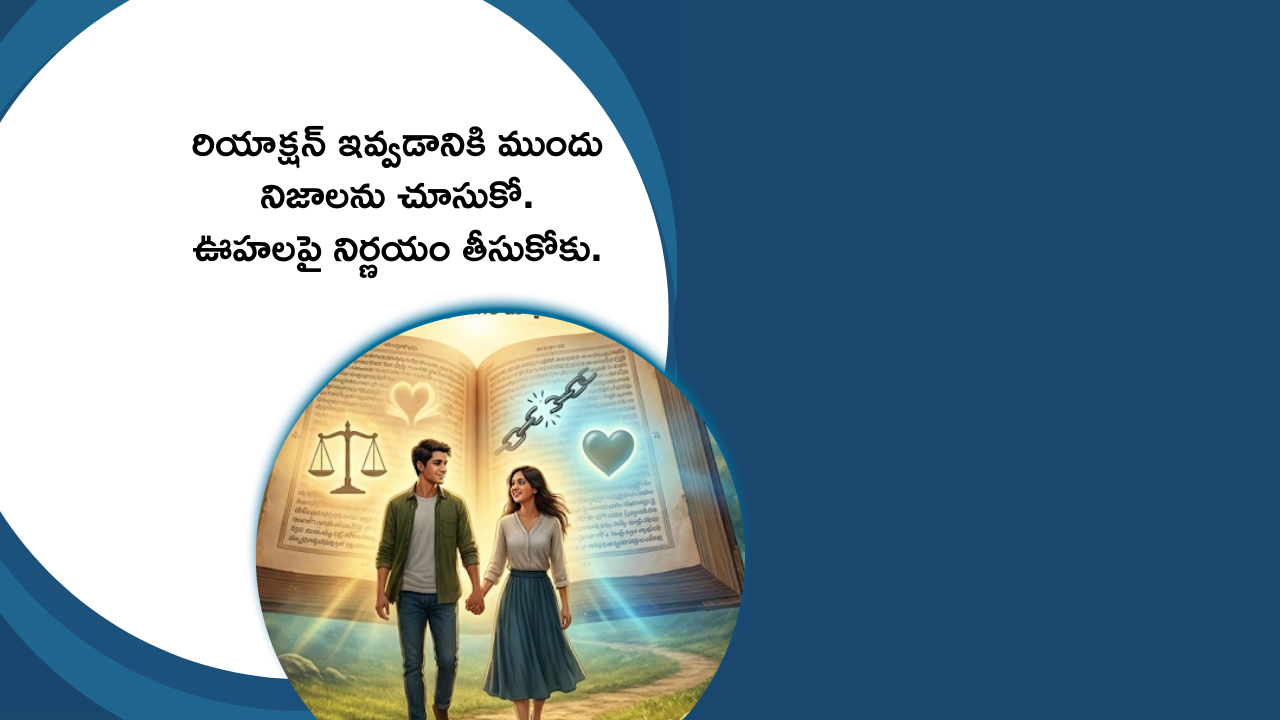
This critical gap is powerfully addressed in Srinivas Sharma’s thought-provoking Telugu book, “రియాక్షన్ ఇవ్వడానికి ముందు నిజాలను చూసుకో. ఊహలపై నిర్ణయం తీసుకోకు” (Before reacting, look at the facts. Don’t make decisions based on assumptions).
The central idea of the book is simple, yet deeply transformative: most problems in life arise not from lack of talent, but from wrong reactions to incomplete or imagined information. Traditional education rarely teaches us how to pause, analyze reality, and respond with awareness. Instead, we carry academic knowledge into life without the tools to apply it wisely.
Srinivas Sharma highlights how assumptions silently control decisions—career choices, personal conflicts, financial risks, and even self-worth. By reacting without verifying facts, individuals often create unnecessary stress and regret. The book encourages readers to slow down, question their own thinking, and align actions with truth rather than emotion.
Why Degrees Alone Are No Longer Enough
In today’s fast-changing world, information is everywhere, but clarity is rare. A degree may open a door, but it does not guarantee confidence, stability, or purpose. Many professionals feel stuck despite strong academic backgrounds. Many students feel lost despite doing “everything right.”
The reason is not failure—it is incomplete preparation.
Real life demands:
- The ability to handle uncertainty
- Emotional resilience during setbacks
- Clear decision-making under pressure
- Self-awareness and responsibility
These skills are rarely graded, yet they define long-term success. Srinivas Sharma’s book acts as a bridge between education and life, offering insights that help readers move from confusion to clarity.
A Guide for Those Seeking Direction
What makes “రియాక్షన్ ఇవ్వడానికి ముందు నిజాలను చూసుకో. ఊహలపై నిర్ణయం తీసుకోకు” especially relevant is its practical, grounded approach. It does not criticize education; instead, it complements it. The book speaks to students, working professionals, and anyone who feels that life is more complex than what textbooks prepared them for.
By learning to observe facts before reacting, readers develop confidence rooted in understanding, not fear. They learn to take responsibility for their choices rather than blaming circumstances. Over time, this mindset shift creates emotional stability and clear direction—qualities every individual seeks but few are taught.
Redefining What Education Should Mean
True education should not end with a certificate. It should continue as a lifelong process of understanding oneself and the world. While traditional education builds knowledge, books like Srinivas Sharma’s build wisdom.
In a society where reactions are instant and assumptions are common, choosing to pause, reflect, and respond consciously is a powerful advantage. That skill alone can change careers, relationships, and self-belief.
For Telugu readers searching for clarity, confidence, and a deeper understanding of life beyond academics, this book is more than a read—it is a guide. It reminds us that real preparation for life begins not in classrooms, but in the way we think, perceive, and choose to act.
Sometimes, the most important lesson is not what to do next—but how to think before we react.