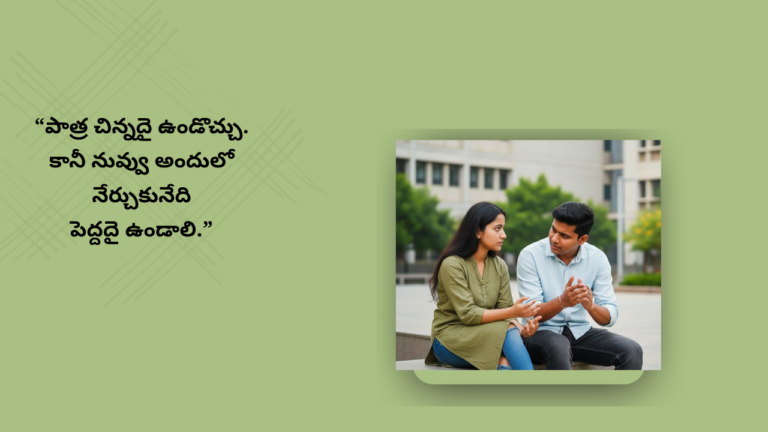


For decades, traditional education has been positioned as the ultimate solution to life’s challenges. From early schooling to higher studies, we are taught that good marks, degrees, and qualifications will lead to stability, respect, and happiness. Families invest time, money, and emotions into education with the belief that it prepares individuals for the real world. Yet, as many graduates step into adult life, a quiet realization emerges: academic success does not always translate into emotional clarity or life readiness.
The real world does not test us only on knowledge. It tests us on how we manage expectations, relationships, disappointment, and inner conflict. These are areas where traditional education often remains silent.
The Emotional Gap Left by Education
Schools and colleges focus on intellectual development, but rarely address emotional intelligence. Students learn how to solve problems on paper, but not how to navigate misunderstandings in relationships, pressure at work, or unmet expectations in life. As a result, many educated individuals feel confident professionally but confused personally.
This gap becomes especially visible in relationships. Love, attachment, and emotional expectations are powerful forces in human life, yet they are never discussed in classrooms. When individuals enter relationships without emotional awareness, they often carry unrealistic expectations—about how others should behave, care, or respond. When those expectations are not met, love slowly turns into pressure.
When Expectations Turn Love into a Burden
This subtle but deeply important truth is the central theme of Srinivas Sharma’s Telugu book, “ఆశ ఎక్కువైతే ప్రేమ బరువుగా మారుతుంది” (When expectations grow, love becomes a burden). The book does not criticize love; instead, it explains how excessive expectations can silently damage emotional connections.
Srinivas Sharma presents a simple yet powerful idea: love itself is not the problem—our expectations are. When we expect others to behave according to our assumptions, we unknowingly place emotional weight on relationships. Over time, this weight leads to frustration, misunderstanding, and emotional exhaustion.
Traditional education rarely prepares individuals to recognize this pattern. We are taught to aim higher, expect more, and achieve better outcomes—but when the same mindset is applied to human relationships, it often creates imbalance. The book helps readers understand where to draw the line between healthy hope and harmful expectation.
Real-World Challenges Go Beyond Academics
In real life, success depends not only on skills and qualifications but also on emotional stability. Many professionals struggle not because they lack talent, but because they feel overwhelmed by pressure—at work and at home. Relationships become sources of stress rather than support. Confidence weakens when expectations repeatedly clash with reality.
The education system does little to prepare individuals for these moments. There are no exams on handling rejection, no grades for emotional maturity, and no textbooks on letting go of unrealistic expectations. This is why books like “ఆశ ఎక్కువైతే ప్రేమ బరువుగా మారుతుంది” become essential life guides rather than optional reads.
Clarity, Confidence, and Direction Through Awareness
What makes Srinivas Sharma’s work resonate deeply with Telugu readers is its grounded, realistic approach. The book encourages self-reflection rather than blame. Instead of asking readers to change others, it invites them to observe their own expectations and emotional patterns.
By reducing expectations, individuals often experience emotional relief. Relationships feel lighter. Communication becomes clearer. Confidence grows—not from control, but from understanding. This inner shift provides direction in life that no degree alone can offer.
For those seeking clarity, the book acts as a mirror. For those seeking confidence, it offers emotional strength. And for those feeling lost despite being educated, it provides a sense of direction rooted in reality rather than illusion.
Redefining What It Means to Be Educated
True education should prepare individuals not just to earn a living, but to live well. While traditional education builds careers, emotional education builds peace. Both are necessary, but one has been largely ignored.
“ఆశ ఎక్కువైతే ప్రేమ బరువుగా మారుతుంది” reminds us that real-world challenges are not always external. Often, they begin within—through unchecked expectations and unexamined emotions. Learning to manage these is as important as any academic qualification.
As society evolves, the definition of education must expand. It must include emotional awareness, realistic thinking, and inner balance. Until then, books like Srinivas Sharma’s serve as essential companions for those navigating life beyond classrooms.
In the end, the most valuable education is not what we achieve—but what we understand about ourselves and others.