From a young age, we are taught a single, powerful belief: study well, earn good marks, get a degree, and life will fall into place. Schools and colleges are designed around this promise. Classrooms reward memorization, examinations measure recall, and certificates are treated as proof of readiness. Yet for many students and professionals today—especially in the Telugu-speaking community—the moment they step outside the academic system, a harsh reality emerges. Despite years of education, real life feels unfamiliar, uncertain, and overwhelming.
This growing discomfort raises an important question: Does traditional education truly prepare us for the real world?
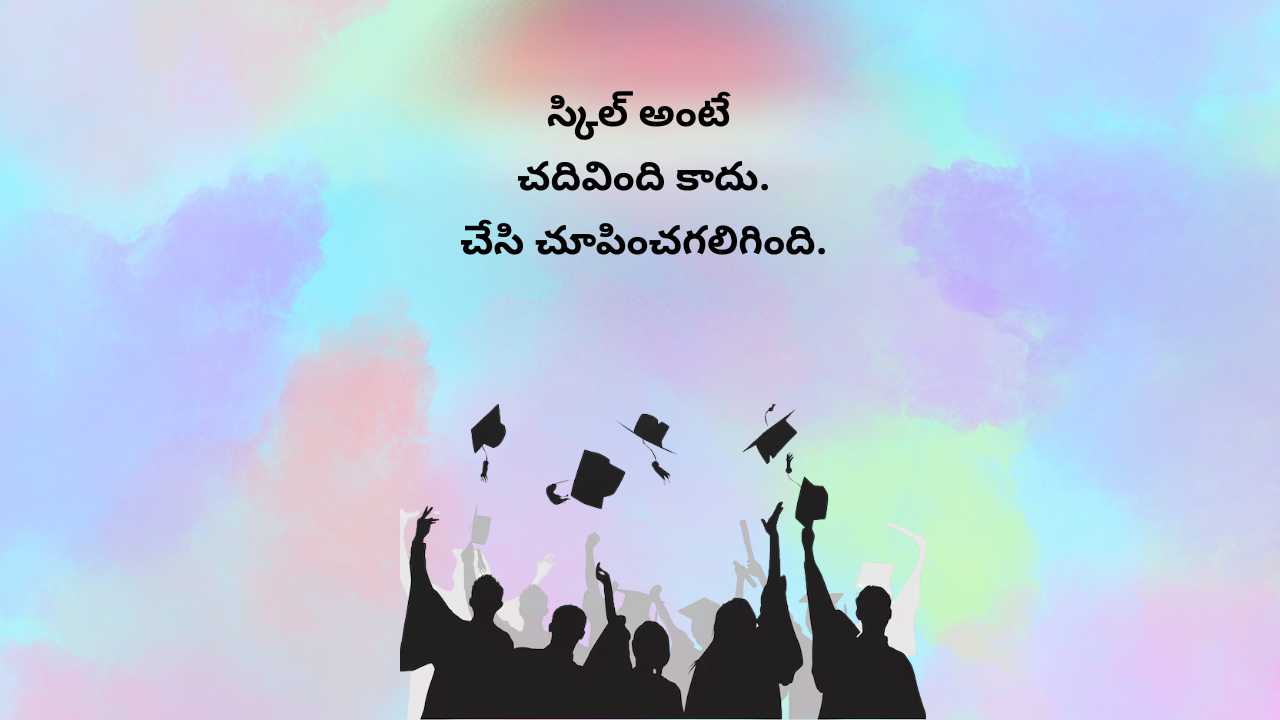
Srinivas Sharma’s impactful Telugu book, “స్కిల్ అంటే చదివినది కాదు, చేసి చూపించగలగడం,” confronts this question head-on and offers a deeply relevant answer for our times.
The Illusion of Preparation
Traditional education excels at providing structure, discipline, and theoretical knowledge. These are valuable foundations. However, the modern world does not reward theory alone. It demands execution, adaptability, and problem-solving in real situations. Many graduates realize too late that while they know about things, they do not know how to do them.
Srinivas Sharma describes this gap with striking clarity. He explains that education often creates the illusion of preparation. Students feel confident inside classrooms, but once exams end, confidence fades because there is no real-world proof of capability. The book’s core idea is powerful in its simplicity: skill is not what you have read, but what you can demonstrate.
When Degrees Fail to Build Confidence
One of the most emotional aspects of this journey is the silent loss of self-belief. A student who once topped exams may struggle to secure a job. A degree holder may feel dependent, confused, and directionless. Society often labels this as personal failure, but the book reframes it as a system failure.
“స్కిల్ అంటే చదివినది కాదు, చేసి చూపించగలగడం” speaks directly to those moments of doubt. It reminds readers that lack of income or opportunity does not mean lack of intelligence. Instead, it highlights how traditional education rarely trains students to convert knowledge into value. Without that conversion, confidence collapses.
Skill as Action, Not Information
In today’s world, opportunities favor those who can apply learning, not just accumulate it. Employers, clients, and markets look for people who can solve problems, communicate clearly, and deliver results. Srinivas Sharma emphasizes that skill is built only through action—by doing, failing, improving, and repeating.
This mindset shift is crucial. The book encourages readers to move away from waiting for validation through degrees and toward building proof through real outcomes. Whether it is learning a digital skill, improving communication, or starting small income-generating projects, progress begins with practice.
A Message That Resonates Deeply with Telugu Readers
What makes this book especially powerful is its emotional and cultural relevance. It understands the pressures faced by Telugu youth—family expectations, social comparisons, and the fear of disappointing loved ones. Instead of offering motivational clichés, it provides practical clarity. It tells readers that dignity and success come from capability, not certificates.
The book does not reject education; it completes it. It encourages readers to respect learning but not worship it blindly. True growth, it argues, happens when education meets execution.
Redefining Real-World Readiness
Traditional education is a starting point, not a destination. Real-world readiness comes from curiosity, adaptability, and consistent skill development. Srinivas Sharma’s “స్కిల్ అంటే చదివినది కాదు, చేసి చూపించగలగడం” acts as a guide for those standing at crossroads—students unsure of their future, professionals feeling stuck, and individuals searching for confidence.
Ultimately, the book delivers a liberating truth: you are not behind in life—you are simply early in your skill journey. When learning turns into action, clarity replaces confusion, and confidence grows naturally.
In a world that rewards what you can do, not just what you know, this book offers both direction and hope. True education begins when knowledge transforms into ability—and ability transforms into purpose.