Does Traditional Education Really Prepare Us for the Real World?
For decades, traditional education has been promoted as the safest path to a successful life. Good marks, a reputed college, and a recognized degree are often seen as guarantees of stability and respect. Parents encourage it, students chase it, and society rewards it. Yet today, a growing number of educated young people are asking a difficult question: If we are so educated, why are we still struggling to find meaningful jobs? More Details – https://www.srinivassharma.com/books/
This question sits at the heart of the real-world challenge faced by many Telugu youth today.
The Gap Between Degrees and Employability
Traditional education systems focus heavily on theory, examinations, and academic performance. While these elements are important, they often fail to prepare students for the practical demands of the modern workplace. Employers today look beyond certificates. They seek problem-solving ability, communication skills, adaptability, digital awareness, and confidence—qualities rarely tested in exams.
As a result, many graduates step out of college with strong academic knowledge but weak real-world readiness. This mismatch creates frustration, self-doubt, and confusion. Students begin to question their abilities, even though the issue lies not with their effort, but with the system that prepared them incompletely.
Why Telugu Youth Feel Left Behind
The pressure is especially intense among Telugu youth, who often face high expectations from family and society. Education is seen as an investment, and employment as the return. When jobs do not come easily, the emotional burden grows. Many young people feel they have done everything right, yet still stand at a disadvantage in the job market.
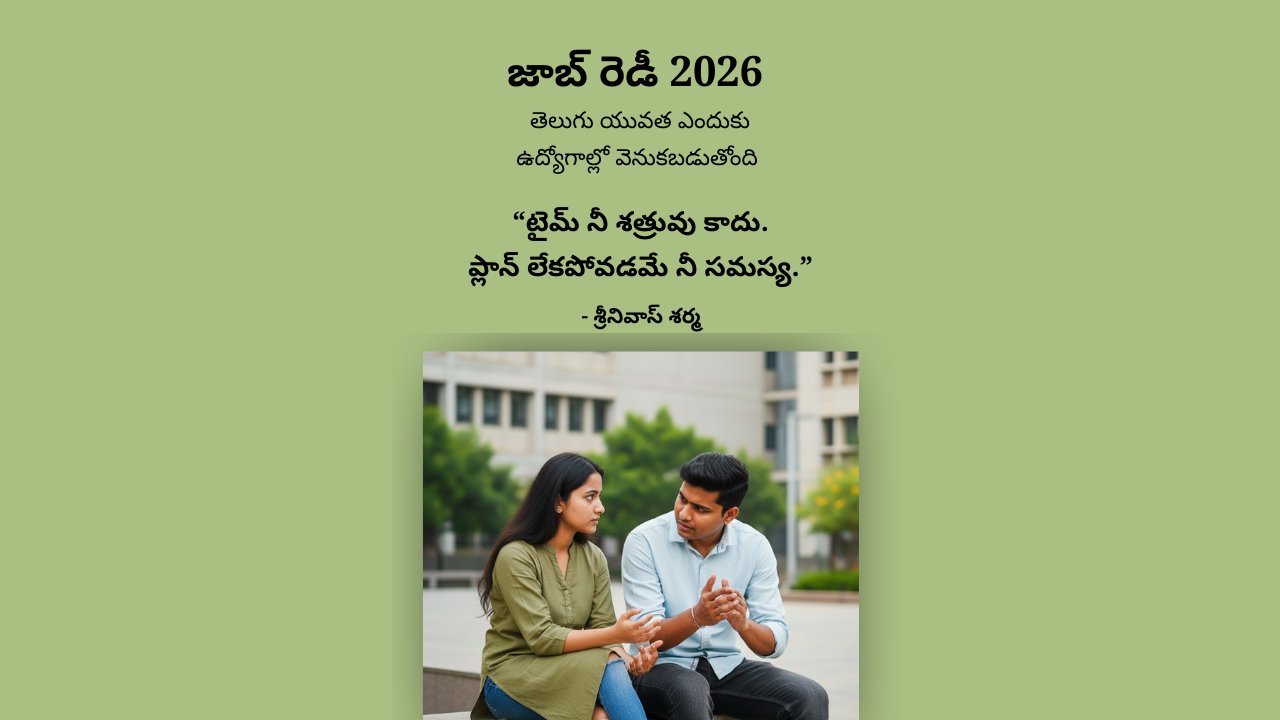
This reality is explored in depth in Srinivas Sharma’s insightful Telugu book, “జాబ్ రెడీ 2026 – తెలుగు యువత ఎందుకు ఉద్యోగాల్లో వెనుకబడుతోంది”. The book addresses a question that many are afraid to ask openly: Why are Telugu graduates falling behind in employment despite having degrees?
Education vs. Job Readiness
Srinivas Sharma makes a clear distinction between being educated and being job-ready. Education provides knowledge, but job readiness requires application. The modern workplace demands practical exposure, industry awareness, and the ability to learn continuously. Unfortunately, traditional education often ends at the classroom door.
The book highlights how outdated curricula, lack of skill-based training, and minimal career guidance leave students unprepared for real challenges. It also points out that waiting for the system to change is not enough. Individuals must take responsibility for upgrading themselves in line with market needs.
Building Confidence Through Clarity
One of the strongest aspects of “జాబ్ రెడీ 2026” is its balanced tone. It does not blame students, nor does it attack the education system blindly. Instead, it offers clarity. By understanding where the gap lies, young people can stop doubting themselves and start building confidence through informed action.
Clarity brings direction. When students understand what skills are missing, they can focus on acquiring them. When they understand industry expectations, they can prepare strategically rather than randomly. This shift in mindset reduces anxiety and replaces confusion with purpose.
Real-World Skills Matter More Than Ever
In today’s rapidly changing job market, adaptability is as important as qualification. Automation, artificial intelligence, and digital platforms are reshaping careers. A degree earned years ago may not be enough for tomorrow’s roles. Lifelong learning is no longer optional—it is essential.
The book encourages Telugu youth to look beyond traditional definitions of success. Communication skills, practical projects, internships, problem-solving ability, and emotional intelligence are now critical. These are the skills that transform education into opportunity.
Redefining the Purpose of Education
True education should empower individuals to face life with confidence, not fear. It should prepare them not only to pass exams, but to handle uncertainty, competition, and change. When education fails to do this, individuals feel lost—even after years of study.
“జాబ్ రెడీ 2026 – తెలుగు యువత ఎందుకు ఉద్యోగాల్లో వెనుకబడుతోంది” serves as a guide for those seeking clarity in this confusion. It reminds readers that falling behind is not a permanent state, but a temporary phase that can be overcome with awareness and effort.
For Telugu readers searching for direction, confidence, and a realistic understanding of today’s job market, this book offers more than information—it offers perspective. It bridges the gap between education and employment, helping individuals move from qualification to capability.
In the end, traditional education is only the beginning. Real-world success depends on how well we adapt, upgrade, and prepare ourselves for the challenges ahead.